
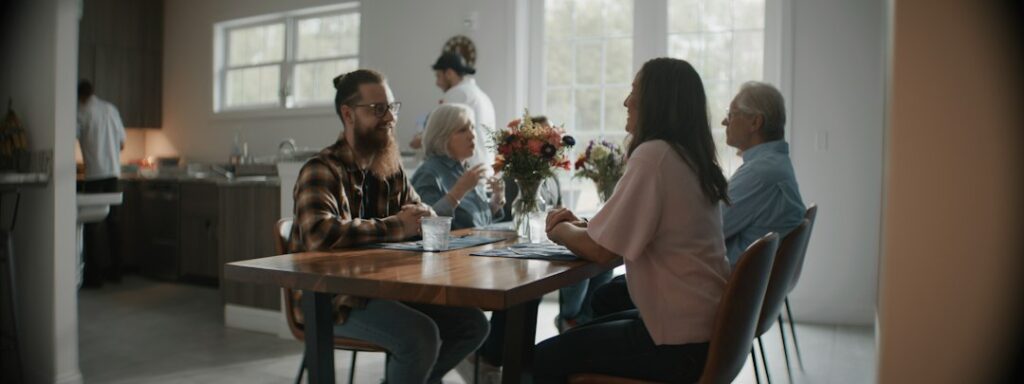
What social connection means in assisted living
Assisted living can support social connection by creating regular opportunities for conversation, shared activities, friendship, and participation in daily life. The goal is not to keep every resident busy at all times. It is to make meaningful interaction easier, especially for people who may be living alone, driving less often, or managing health changes.
Social connection includes more than organized entertainment. It may involve greeting a neighbor at breakfast, talking with a caregiver, joining a small activity, sharing a family story, or sitting with others during a quiet afternoon. These repeated moments can help residents feel recognized and included.
For older adults in Farrell, PA, assisted living may also reduce the social isolation that can develop when winter weather, transportation concerns, mobility limitations, or changes in household size make community involvement more difficult.
How does assisted living help residents make friends?
Assisted living creates repeated contact among people who share similar life stages and routines. Friendships often grow from ordinary encounters rather than formal introductions.
Residents may meet through:
- Shared meals and coffee gatherings
- Card games, crafts, music, or exercise groups
- Conversations in common areas
- Religious, cultural, or seasonal observances
- Outdoor seating areas and walking spaces
- Educational talks or resident-led discussions
- Celebrations involving birthdays, anniversaries, or family visits
A major advantage is consistency. Seeing the same people regularly gives residents time to become comfortable. Someone who is quiet during the first week may gradually begin participating after recognizing familiar faces and learning the rhythm of the community.
Friendship does not have to mean constant socializing. Some residents prefer one-on-one conversation, while others enjoy larger gatherings. A supportive setting allows both preferences.
Can assisted living reduce loneliness?
It can reduce opportunities for loneliness, but it does not automatically eliminate loneliness. A person may live around many others and still feel disconnected if activities do not match personal interests, if hearing or vision problems make conversation difficult, or if grief and depression are affecting participation.
Staff members and family members can help by noticing changes such as:
- Spending most of the day alone
- Skipping meals or previously enjoyed activities
- Showing little interest in conversation
- Becoming unusually irritable, anxious, or withdrawn
- Repeatedly saying that nobody visits or understands them
- Sleeping much more or less than usual
These signs should not be dismissed as simply “getting older.” Loneliness can overlap with depression, anxiety, grief, medication effects, or cognitive changes. A health care professional may need to evaluate persistent changes in mood or behavior.
Social support is also personal. A resident who declines a large group activity may still benefit from a short visit, a shared puzzle, a phone call with family, or a quiet conversation during a meal.
What kinds of activities encourage meaningful interaction?
Activities are most socially useful when they give residents something to talk about, do together, or remember afterward. The most effective programs usually offer variety rather than relying on one type of event.
Examples include:
- Small-group discussions about local history, family traditions, or current interests
- Cooking or baking activities adapted for safety
- Gardening with containers or raised planting beds
- Music listening, singing, or simple rhythm activities
- Gentle movement classes and walking groups
- Art projects that allow conversation without requiring constant eye contact
- Games that can be modified for different abilities
- Intergenerational visits with children or grandchildren
- Volunteer, mentoring, or resident leadership opportunities
- Seasonal activities suited to indoor participation during cold or icy weather
Residents often connect more naturally when activities reflect their abilities and interests. A former teacher may enjoy helping with a discussion. Someone who worked with tools may prefer a practical project. A lifelong reader may welcome a book conversation even if a large social event is uncomfortable.
The activity itself is less important than whether it creates a sense of purpose and shared participation.
How do meals support social relationships?
Shared meals provide one of the most dependable opportunities for informal connection. Unlike a special event, meals occur regularly and give residents a predictable reason to gather.
Dining arrangements can affect participation. Some residents enjoy a lively table with several people. Others may prefer a smaller table or a consistent seat near someone with similar conversation habits. Hearing loss, swallowing concerns, vision changes, and fatigue can also affect the dining experience.
Residents may find it helpful to communicate preferences about:
- Table size and seating location
- Noise levels
- Meal timing
- Dietary needs and food textures
- Assistance needed before, during, or after meals
- Whether conversation or a quieter setting is more comfortable

A meal can be socially successful even if the conversation is brief. Familiarity develops through repeated contact.
What if a resident is shy, hard of hearing, or living with memory loss?
Social connection should be adapted rather than withheld. A resident does not need to be highly outgoing, physically strong, or cognitively unimpaired to participate.
For someone who is shy, a one-on-one introduction or small group may feel more manageable than a crowded gathering. A person with hearing loss may benefit from good lighting, reduced background noise, face-to-face conversation, and seating close to the speaker.
For residents living with memory loss, familiar routines, music, photographs, simple games, and short conversations may be more successful than activities requiring complex instructions. Repeated introductions should be handled respectfully. Correcting a person harshly or drawing attention to memory difficulties can make participation less comfortable.
Physical access matters as well. Clear walking routes, stable seating, rest areas, suitable lighting, and accessible bathrooms can determine whether a resident feels able to join others. During snowy or icy periods, indoor social spaces become particularly important for residents who should not walk outside.
How can families strengthen social connection?
Family involvement remains valuable after a move to assisted living. Visits do not need to be long or elaborate. Consistency often matters more than length.
Helpful approaches include:
- Visiting at a time when the resident has the most energy
- Bringing familiar photographs, music, or objects
- Taking a short walk when conditions are safe
- Joining a meal or activity when appropriate
- Asking open-ended questions instead of testing memory
- Sharing ordinary news from home
- Keeping regular phone or video contact when in-person visits are difficult
- Coordinating with staff if a noticeable mood or behavior change develops
Families can also learn what types of social settings the resident prefers. Some people enjoy frequent visitors, while others need quiet time between interactions. Respecting that preference can make visits more positive.
What should residents ask before choosing assisted living?
Social life should be considered alongside care, cost, room arrangements, and safety. Useful questions include:
- What activities are offered on ordinary weekdays, not only special occasions?
- Are there small-group options for residents who dislike crowds?
- Can residents suggest or lead activities?
- How are new residents introduced to others?
- Are outdoor areas usable in different seasons?
- How are activities adapted for hearing, vision, mobility, or memory needs?
- Are transportation options available for community outings?
- How are residents encouraged to maintain religious, cultural, or personal routines?
- What happens if a resident stops participating?
A strong social environment does not require every resident to attend every activity. It provides choices, welcoming routines, and respectful support for different personalities and abilities.
Assisted living enhances social connection most effectively when residents are treated as participants in a community rather than as people who are merely receiving services. Everyday conversations, shared meals, familiar routines, and opportunities to contribute can help create a greater sense of belonging.
